By JACQUELYN MOOREHEAD Valley Breeze & Observer Staff Writer Jan 22, 2026 – Link

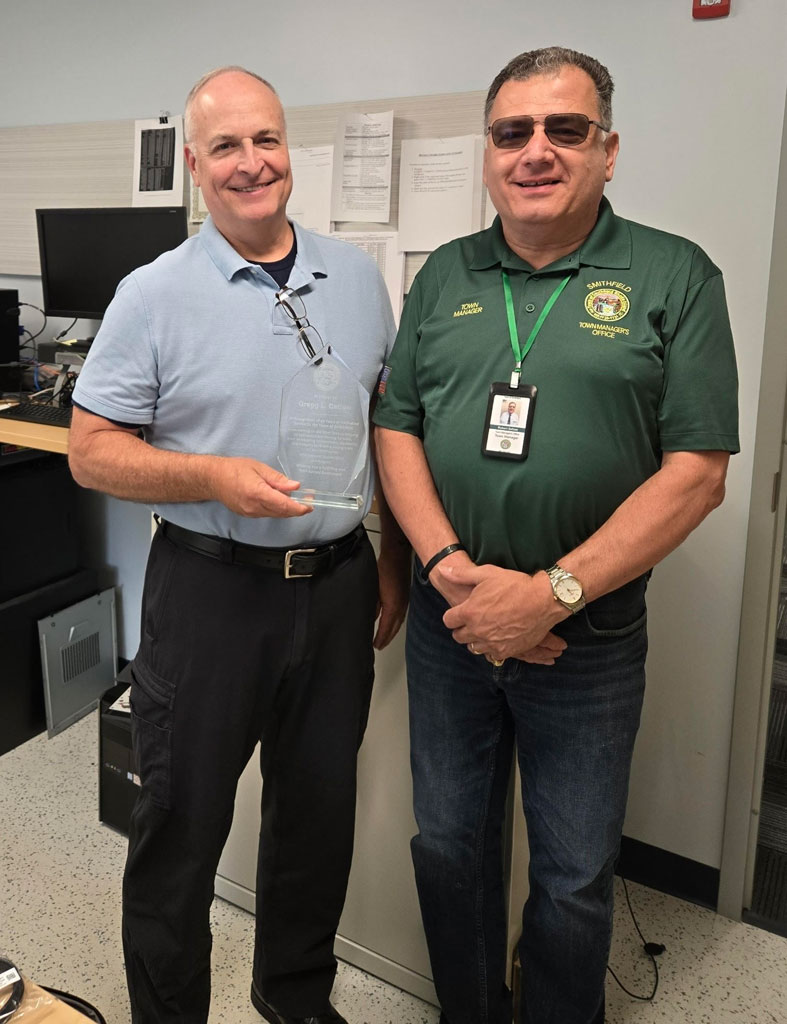
SMITHFIELD – Smithfield Police Department Detective Lt. Douglas Cerce is the 2025 Rhode Island Police Chiefs Association’s Detective of the Year.
Cerce, 50, began his work in the department in 1999, and in 2003, earned the position of temporary detective. Since then, he’s climbed the ranks in the detective division, up to the position of detective lieutenant.
The award was given to him for his exceptional investigative leadership and service to the law enforcement community, according to a release. Cerce has spent more than two decades in the detective division, and oversees complex investigations while mentoring fellow detectives.
Cerce was acknowledged for his expertise in technology-related crimes, leadership of the Rhode Island Detectives Association, and his commitment to education and community outreach.
“I never left. I stayed here the whole time,” Cerce said.
He said he is very excited to earn the honor, which he mentioned was unexpected.
“I thought someone was playing a joke on me,” he said.
Cerce said his goal of becoming a detective in law enforcement stemmed from a family friend in Portsmouth who shared stories of his work as a detective. While at the SPD, Cerce said he has lucked out that were some retirements that left a part-time detective position open.
“Everyone wants to be a K9 officer or a detective. The problem is there are only one to two detectives in a department and only one K9 officer,” he said.
At SPD, the detective division consists of a detective captain, a detective lieutenant, two detective sergeants, a detective, and a temporary detective. Each has different specialties, he said.
After more than 20 years as a detective, Cerce said that though the job is not exactly as one sees on TV, it has felt like he’s on TV sometimes.
“Smithfield is not small enough where we don’t experience different types of crimes. We have small crimes to big crimes like bank robberies,” he said. “We’re at a sweet spot where we have downtime to devote time for cases that may not get attention.”
Cerce said he spends a good chunk of his time investigating cyber cases, particularly fraud.
“We’ve had some good work with those,” he said. “Some of the cases, the amount of money lost can break your heart.”
Over the years, Cerce said he’s become experienced in technology to help solve crimes. His favorite cases that he’s cracked include those that do not have witnesses or much evidence, but he is able to trace the criminal perpetrator using technology.
“I’ve had some good ones over the years. I’ve developed the investigation and interrogation skills,” he said. “People lie to the police. You have to try your best to pick up on the little things.”
The interesting part, he said, is putting the pieces together and closing a case out successfully.
“It always feels good to go back to the victim and tell them you solved it,” he said.
Cerce said he’s no better than any other detective. He said he’s honed his craft over the years though training and working with other detectives.
Cerce said his specialty is the network he grew from working with the Rhode Island Detectives Association. He said working with other detectives is the best in this line of work. Cerce led the RIDA in 2010, and remains a leader in the association.
“It paid dividends for me knowing the right person in the room that can help with a case,” he said. “I’m the guy who knows the guy. I know who to call for help across the state. It’s what I do best.”
Some crimes go unsolved, he said, and that’s part of the job. Many of the fraud crimes occur internationally, particularly cryptocurrency crimes. Sometimes it’s as easy as looking into transactions, other times, it’s not.
“Our investigators (have) got to be more and more tech trained,” he said.
Cerce said work is less in the field and more administrative these days. He said he’s excited to be setting up a new record system and training officers on the new system. He said he sees the benefit in technology.
“I still work some cases now and then. Working for the victims is what we signed up for,” he said.
Cerce said he has a few years left in the department before he would consider retiring. Often, retired detectives go into the private sector working in security, government or state jobs. When he started in the SPD, Cerce said it was difficult to get a police job with hundreds of applicants vying for a job.
Now, it’s not the same and departments are typically seeking qualified applicants. He said when he landed a job at SPD, he was grateful for the opportunity and decided he would stay.
“I definitely made the right move. Smithfield is a good fit. They do things the right way. I’m very fortunate to be here,” he said.